
Exploring Andalusia: A Halal Travel Guide to Spain’s Islamic Heritage
Summary
Andalusia offers one of Europe’s richest Muslim heritage experiences, from the Alhambra in Granada to the Great Mosque–Cathedral of Cordoba. This guide focuses on halal‑friendly logistics, prayer spaces, halal food, and halal cultural tours Spain so you can explore Spain’s Islamic past in a way that aligns with your faith and values.
Why Andalusia Is Perfect for Muslim Heritage Travel
Andalusia (Andalucía) in southern Spain was the heart of al‑Andalus, the Islamic civilization that flourished in the Iberian Peninsula for over 700 years. Cities like Granada, Cordoba, Seville, Malaga, and Almeria still show visible traces of Islamic architecture, gardens, and urban planning, making this region ideal for muslim heritage travel and halal history tours Europe.
- Architectural masterpieces: Alhambra, Alcazaba, courtyards, fountains, and geometric ornamentation.
- Multicultural roots: A blend of Muslim, Christian, and Jewish history woven into daily life.
- Halal‑friendly present: Many Muslim residents and halal restaurants, making this a welcoming base for conservative travelers.
Andalusia works beautifully as a 7–10 day halal cultural tour, combining history, family sightseeing, and even beach time on the Costa del Sol.
Top Andalusian Cities to Visit
1. Granada – The Crown of al‑Andalus
Granada is the gateway to Andalusia’s Islamic heritage, home to the Alhambra and the Albaicín neighborhood.
- Alhambra Palace and Generalife Gardens:
A UNESCO World Heritage site and one of the finest surviving Islamic palaces in the world. The palace was seat of Nasrid rulers, with intricate stucco, courtyards, and water features. - Albaicín (Old Muslim Quarter):
A maze of narrow streets, whitewashed houses, and tiny plazas with views over the Alhambra. - Mosque‑Albaicín:
A small but active mosque serving the local Muslim community, often used by visiting Muslim tourists for prayer. - Halal food:
Options in the city center and near the Albaicín, including halal kebabs and Middle Eastern restaurants.
Tip: Book Alhambra tickets weeks in advance; morning visits avoid long queues and heat.
2. Cordoba – The Great Mosque and Mosque–Cathedral
Cordoba was the capital of the Umayyad Caliphate in the 10th century, a golden age of learning and culture.
- Great Mosque–Cathedral (Mezquita–Catedral):
This monument is both a Christian cathedral and the former Great Mosque of Cordoba. The forest of red‑and‑white arches and prayer‑hall atmosphere make it a must‑see for muslim heritage travel. - Jewish Quarter (Barrio de la Judería):
Winding alleys, traditional courtyards, and historic synagogues. Many gardens were once part of private Muslim homes. - Mosque Vermuda:
A modern mosque serving the city’s Muslim community; convenient for Fajr, Dhuhr, and Maghrib if you’re staying in the city. - Halal food:
Several halal restaurants and shawarma/kebab places near the city center and train station.
Cordoba works beautifully as a day trip from Seville by high‑speed train (about 45 minutes), making it ideal for a halal history tour day.
3. Seville – Mudéjar Beauty and Islamic Roots
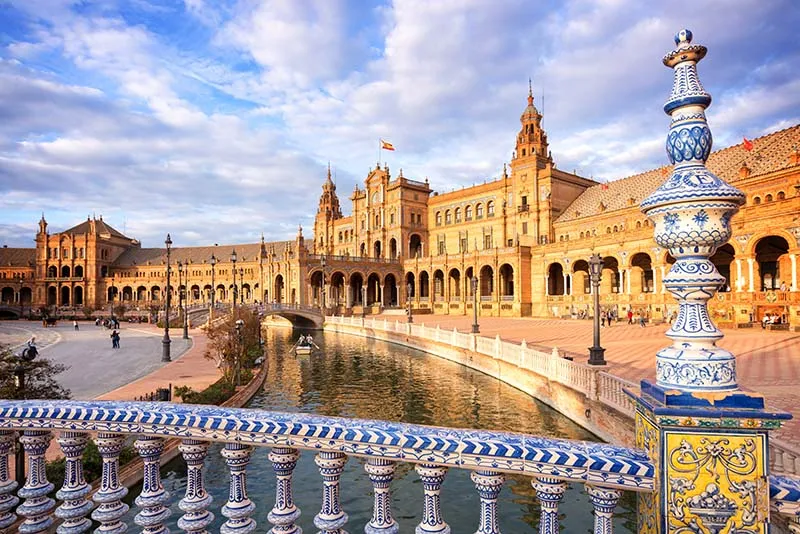
Seville was a major political and cultural center under both Muslim and Christian rule.
- La Giralda and the Alcázar:
La Giralda was originally the minaret of the main mosque of Seville. The Alcázar palace shows a clear blend of Islamic and Christian architecture. - Barrio de Santa Cruz:
The former Jewish quarter with whitewashed houses, flower‑filled patios, and tiny alleys that feel like small Andalusian medinas. - Mosque Al‑Rahma:
One of Seville’s main mosques, often used by visitors and students for prayer and small gatherings. - Halal food:
Several halal restaurants in the city center, including halal steakhouses and grill houses that are popular among Muslim students.
Tip: Combine a morning visit to La Giralda or the Alcázar with a late‑afternoon prayer at the mosque, followed by a halal dinner.
4. Malaga – Coastal Andalusia and the Alcazaba
Malaga offers a more relaxed vibe and an easy entry point for halal cultural tours Spain.
- Alcazaba of Malaga:
A hilltop fortress with beautiful gardens, water channels, and sea views. Originally built by Muslim rulers, it operated as a citadel during the Andalusian era. - Roman Theater & Gibralfaro Castle:
The area around the citadel mixes Islamic, Roman, and Christian ruins, offering a layered view of history. - Prayer spaces:
Local mosques and prayer rooms in the city center; some Muslim travelers arrange with local communities for prayer space when visiting. - Halal food:
A growing number of halal restaurants and halal‑certified supermarkets in the city, plus options near the beach and port area.
Malaga works well as a 2–3 day base, with trips to Granada, Cordoba, or inland villages.
5. Almeria & the Eastern Coast – Islamic Fortresses and Beaches
Eastern Andalusia often gets overlooked, but places like Almeria, Lorca, and Almeria’s Alcazaba fortress also reflect Islamic architectural styles.
- Almeria’s Alcazaba:
A large hilltop fortress with gardens and views of the Mediterranean. - Murcia and Eastern Andalusia:
Mix of Islamic, Christian, and later Spanish architecture. - Halal food:
Smaller but growing halal community; check local halal directories or Halal Trip before arrival.
These areas suit travelers who enjoy combining history with beach relaxation and slightly quieter cities.
Planning Your Halal Cultural Tours Spain
A typical 7‑day halal cultural tour of Andalusia might look like:
- Days 1–3: Granada
Alhambra, Albaicín, Mosque‑Albaicín, and halal restaurants. - Days 4–5: Cordoba
Great Mosque–Cathedral, Judería, Mosque Vermuda, halal food. - Days 6–7: Seville or Malaga
Seville (Alcázar, La Giralda, Mosque Al‑Rahma) or Malaga (Alcazaba, Old Town, halal seaside options).
Trains (AVE), buses, and even short flights between Andalusian cities make it easy to connect these destinations, especially for halal history tours Europe.
Spiritual and Cultural Etiquette Tips
- Dress modestly at historical sites:
Cover shoulders and knees when visiting mosques turned into museums or cathedrals. - Be respectful of prayer times:
Some mosques in Andalusia are small but active; announce your visit in advance if possible. - Photography:
Ask before taking photos of people, especially in prayer spaces or small mosques. - Learning context:
Understanding the history of al‑Andalus, the convivencia (shared coexistence), and the eventual Reconquista enriches a muslim heritage travel experience.
Halal Logistics: Food, Prayer, and Transportation
- Halal food:
Look for halal‑certified signs or ask the staff. Many Andalusian kebabs, grill houses, and Middle Eastern restaurants in tourist areas are halal‑friendly. - Prayer facilities:
Most major cities have at least one mosque or prayer space; HalalTrip, Google Maps, or local Muslim associations can help locate them. - Transportation:
Andalusia is well connected by rail, bus, and car. For Muslim families, renting a halal‑family‑friendly car with prayer mats and Qur’an apps can make long journeys easier.
Why Andalusia Fits Muslim Heritage Travel
Exploring Andalusia does not just show “beautiful old buildings.” It lets Muslim travelers walk through places where Islamic science, theology, art, and architecture once flourished publicly. Visiting these sites can inspire a deeper connection to Islamic history, while the halal‑friendly present makes it easy to travel with modesty and faith in mind.
Whether you choose a guided halal history tour, a self‑drive muslim heritage tour, or a mix of culture and beach relaxation, Andalusia offers a rich, emotional, and visually stunning experience for halal cultural tours Spain and halal history tours Europe.